
S.20
Komebukuro, Kinchaku & Co
Embroidering Japanese rice and gift bags using the sashiko and boro technique
Mon 27 - Fri 31 July 2026
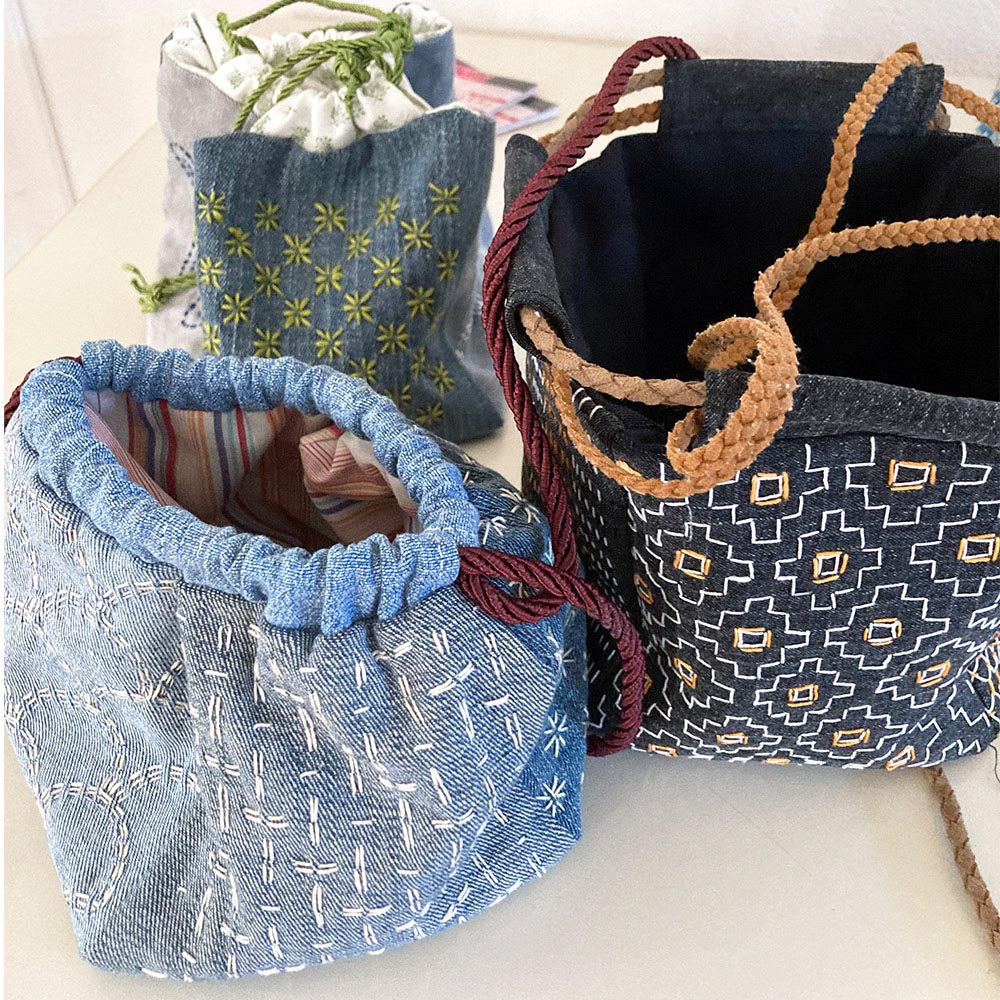
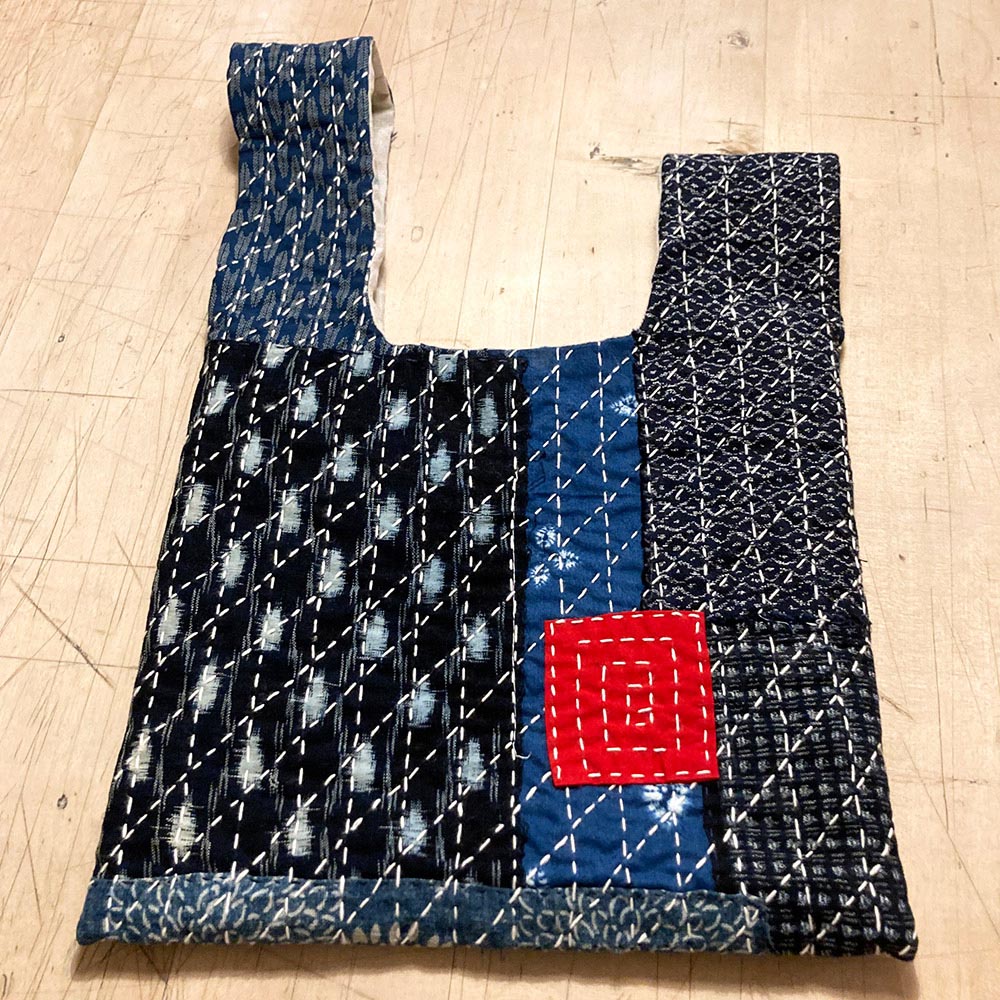
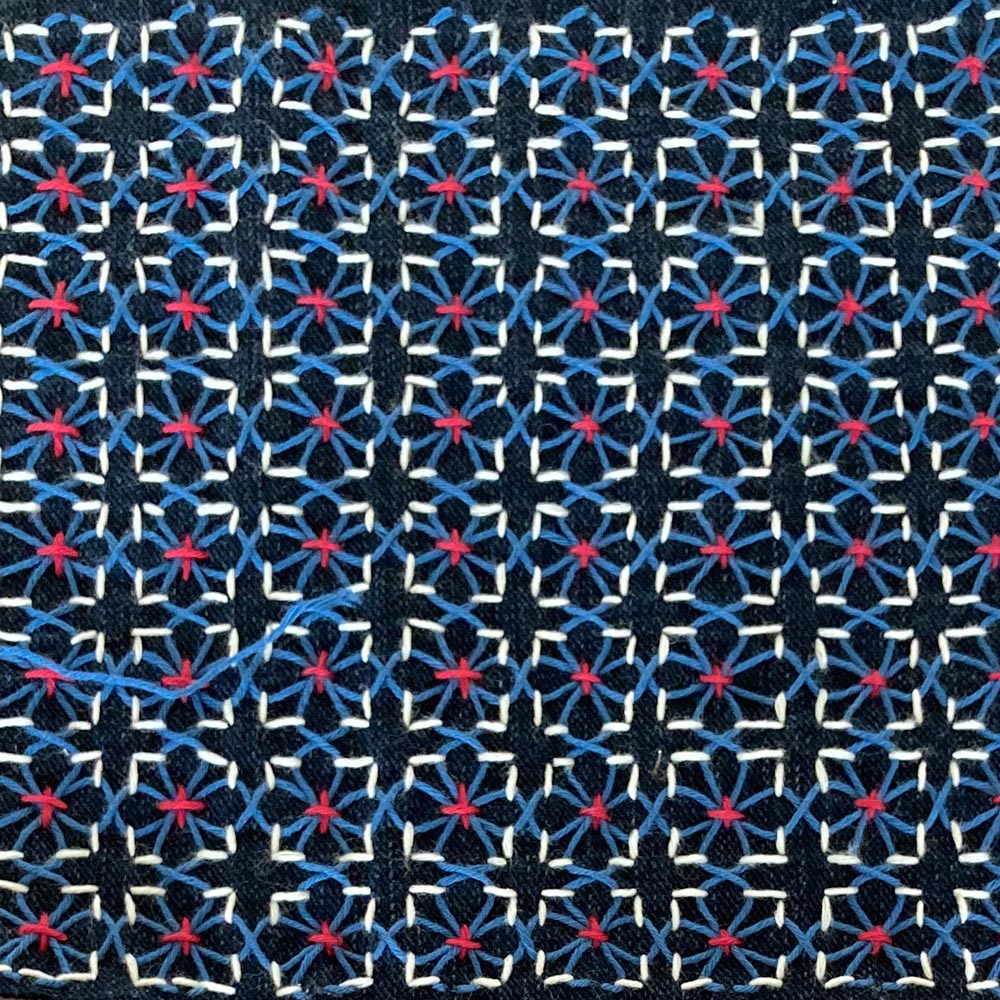
In this course, we will learn about Japanese bags and pouches that are well suited for working with traditional embroidery and mending techniques. Komebukuro are rice bags made from worn clothing, i.e. recycled. Sashiko is an ancient Japanese embroidery technique that can be used to reinforce and embellish damaged clothing. In this course, we will skilfully practice the sustainable use of textiles by cutting rice bags from used clothing (preferably jeans) and learning the most important basic steps and patterns of sashiko embroidery. Kinchaku bags are often given as gifts in Japan. They are a good way to try out the boro technique. Boro means patchwork and can be described as Japanese patchwork or quilting. The finished bags can be used in a variety of ways: as cosmetic bags, storage for cables and chargers, embroidery and knitting utensils, etc. After a little practice, we can also create new bag shapes.
Group of participants: Ideal for beginners and those returning to the world of embroidery
Requirements: none
Number of participants: max. 10 persons
Course language: German, English if required
Course times: Mon - Thu 9:00-12:30 and 14:00-17:30, Fri 9:00-12:30 and 14:00-16:00
Course fee: 420 euros, for students 380 euros (excluding material costs)
Course instructor: ANNE NEUHAUSER, Austria
Born in Würzburg in 1962, has lived in Salzburg for many years. Studied English and Slavic Studies (Mag.phil. 1992) and Psychology (MSc 2023), numerous study visits to learn textile techniques in Japan (Sashiko, Boro, Shibori), Taiwan and the Philippines (weaving and primary techniques), India (embroidery). Works as a psychological counsellor in her own practice and since 2019 as a lecturer for sustainable handling of textiles and embroidery and darning techniques at various educational institutions.
More info: www.kunst-stiche.at